
Exhibition Browse: Mexican Modernism: Revolution and Reckoning
El Volcán
Read More


Vasija Compuesta con Tripie Hueco
Ceramic vessel. The legs are hollow with a partial opening along the front; one small ceramic ball is within each leg and creates a sound when moved.
Read More
La Niña Muerta
Read More
Cautivos
Read More
Caballos
Read More
Figura
Read More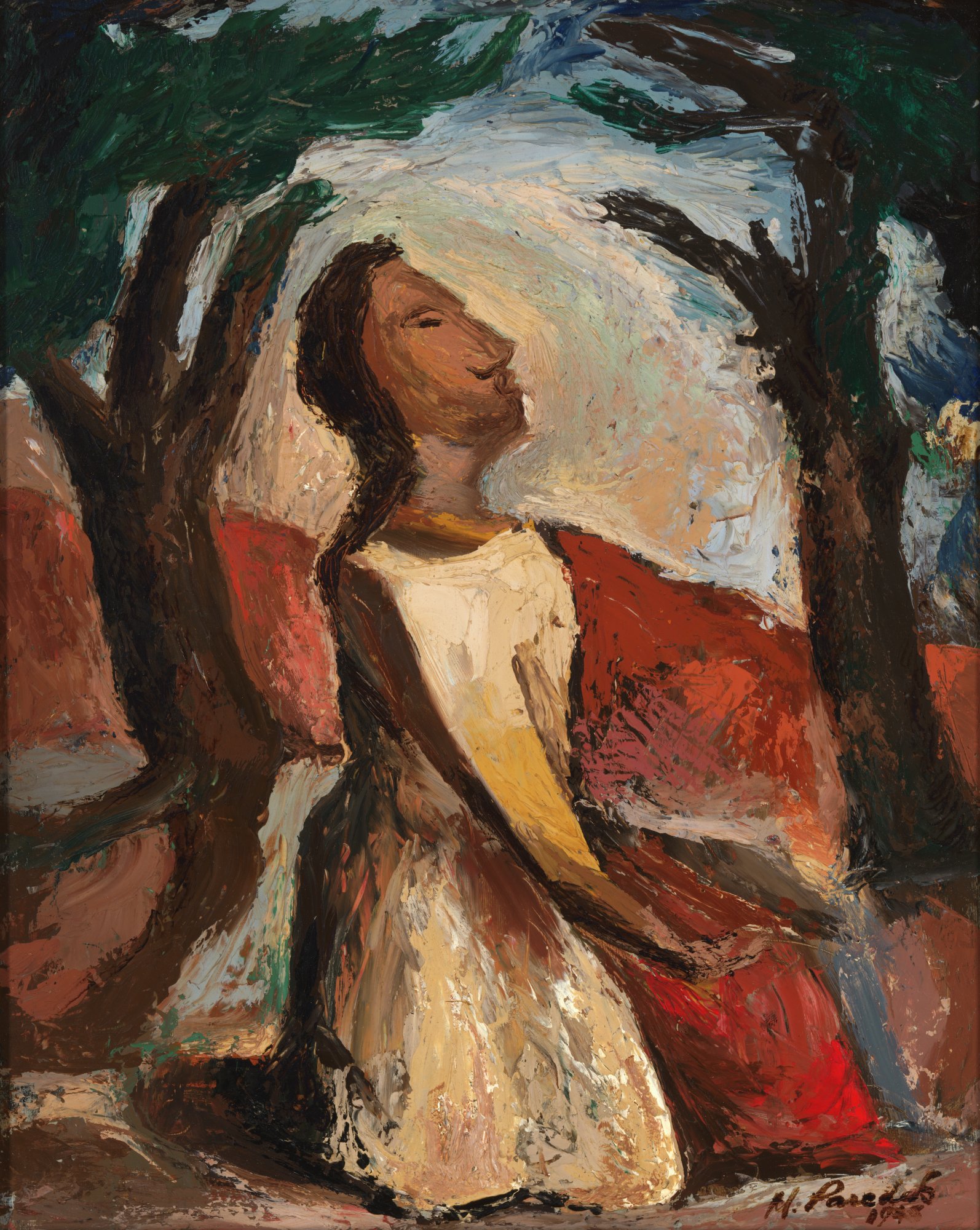
Paisaje
Read More
Xochiquetzal
Read More
La Anunciación del Nahual
Read More
Cabeza de Indio
Read More
Vendedora de Jitomates
Read More

Escena de una Calle Mexicana
Read More
Trajes Regionales Mexicanos: Plate 2: Hombre de Saltillo, Estado de Coahuila, en Traje de Charro con Sarape
This is plate two of the portfolio "Trajes Regionales Mexicanos."
Read More
Trajes Regionales Mexicanos: Plate 7: Musicos de Atotomilco; Estado de Guanajuato
This is plate seven of the portfolio "Trajes Regionales Mexicanos."
Read More
Estampas del Popol-Vuh: Plate 1
Like many of his Mexican contemporaries in the early 1940s, Mérida embraced his ancient, indigenous roots through modern cultural expressions. The lithographs combine Abstract Expressionist gesture influenced by European artists such as Paul Klee and Joan Miró with interpretations of linear drawings found in Mayan murals.
Read More
Estampas del Popol-Vuh: Plate 2
Like many of his Mexican contemporaries in the early 1940s, Mérida embraced his ancient, indigenous roots through modern cultural expressions. The lithographs combine Abstract Expressionist gesture influenced by European artists such as Paul Klee and Joan Miró with interpretations of linear drawings found in Mayan murals.
Read More
Estampas del Popol-Vuh: Plate 4
Like many of his Mexican contemporaries in the early 1940s, Mérida embraced his ancient, indigenous roots through modern cultural expressions. The lithographs combine Abstract Expressionist gesture influenced by European artists such as Paul Klee and Joan Miró with interpretations of linear drawings found in Mayan murals.
Read More